Triangle: A Smart Shape for Small Business Branding
First Impression: Clean, Confident, and Commercially Versatile
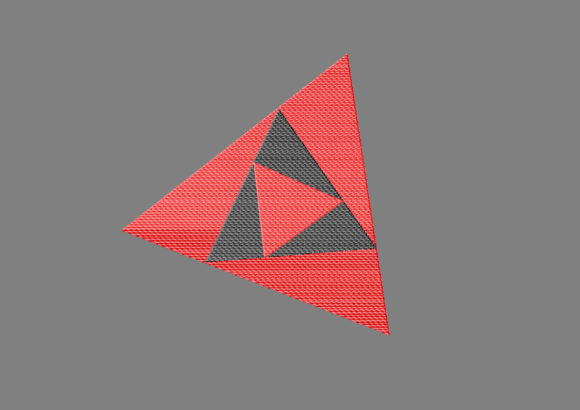
As an embroidery designer who’s developed hundreds of assets for cafés, boutiques, bakeries, florists, and pet brands, my first thought when I see Triangle isn’t “geometric decoration”—it’s “brand accelerator.” The name alone signals clarity and intention. Triangle feels modern without being cold, structured without rigidity, and minimalist without sacrificing presence. It doesn’t scream “playful” or “rustic” outright—instead, it adapts. On a linen apron for a ceramic studio? It reads handmade and grounded. On a black cap for a specialty coffee roaster? It reads bold and intentional. That flexibility is rare—and invaluable—for small business merch.
Real-World Performance Across Merchandise Types
Triangle excels where many shape-based designs falter: consistency across scale and surface. As an embroidered patch, it holds crisp edges even at 1.5 inches—ideal for uniform chest placement or tote bag corner accents. For cap embroidery, its open interior space avoids over-stuffing the front panel, reducing stitch density pressure and minimizing puckering on curved crowns. On aprons and work shirts, Triangle works beautifully as a subtle sleeve detail or pocket accent—clean enough to pair with text-based logos but strong enough to stand alone.
For boutique merchandise and Etsy sellers, Triangle functions as both a primary brand mark and a supporting design asset. Imagine it stitched beside a shop name on a cotton tea towel, or repeated in a clean line along the hem of a reusable produce bag. Its simplicity makes it highly compatible with printable mockups—clients can visualize it instantly on mugs, packaging tags, or product labels before production begins. And because it’s a machine embroidery design built for versatility, it integrates smoothly into commercial embroidery workflows alongside more complex logos.
Where to Use Triangle Thoughtfully
Even strong shapes need context-aware application. Triangle performs best when placed on stable, medium-weight fabrics like twill, canvas, or midweight cotton blends. On highly textured fabric—think bouclé, heavy terry, or loosely woven burlap—test stitching first: fine outlines may blur without proper stabilizer selection. Similarly, dark uniforms require high-contrast thread colors; avoid light pastels unless you’re layering under a top stitch or using matte metallics for subtle dimension.
Cap fronts and curved surfaces demand extra attention—not because Triangle fails there, but because geometry must be calibrated for distortion. Always run a test on the actual cap blank with correct hoop size and stabilizer stack (cutaway + tear-away often works best). Tiny patch sizes (under 1 inch) are possible, but inspect spacing carefully: tight angles can collapse if stitch density isn’t balanced. Triangle doesn’t include tiny lettering or intricate outlines, so that risk is low—but always verify file integrity at scale before bulk production.
How Triangle Strengthens Brand Identity
In small business branding, recognition isn’t built only through words—it’s reinforced through consistent visual rhythm. Triangle delivers that. Used repeatedly across staff uniforms, customer totes, and product packaging accents, it becomes a silent signature—a shape customers begin to associate with your quality, care, and cohesion. Unlike overly decorative motifs, Triangle supports professionalism without diluting handmade charm. It signals intentionality: this business chose its details, not just its colors.
That intentionality builds trust. When a local florist uses Triangle on delivery totes and employee aprons, it communicates cohesion—not randomness. When a pet brand stitches it onto bandanas and treat bags, it reinforces reliability across touchpoints. And because it’s scalable and adaptable, Triangle helps maintain visual consistency whether you’re launching on Etsy or expanding into wholesale—no redesign needed as your brand grows.
Practical Designer Notes for Production Success
Before sending Triangle to your embroidery machine or handing it to a decorator:
- Test in black and white first—this reveals contrast issues, hidden overlaps, or unintended negative space that color might mask;
- Check small-patch viability—resize to your smallest intended use (e.g., 1.25”) and verify all angles remain distinct;
- Review thread color contrast—especially on dark or patterned fabrics; consider matte vs. glossy thread finishes for texture harmony;
- Inspect spacing and alignment—ensure no elements crowd borders or interfere with seam allowances;
- Confirm hoop size compatibility—some triangle layouts extend diagonally; measure your largest dimension against standard hoops;
- Test on real fabric—not just stabilizer swatches—with your exact garment or patch substrate;
- Use appropriate stabilizer—lighter cuts for woven cotton, firmer layers for knits or stretchy blends;
- Create a client-facing printable mockup—show Triangle in situ on a cap, tote, or apron to secure approval before stitching;
- Compare Triangle beside other design assets—does it complement your wordmark? Does it hold equal visual weight in a suite of icons?
- Confirm commercial licensing—since this is a digital embroidery file intended for small business merch, ensure usage rights cover resale, branded patches, and custom apparel production.
Final Thought: Shape With Purpose
Triangle isn’t just another embroidery file in the Shapes category—it’s a strategic tool. In a crowded market where handmade product buyers scan for authenticity *and* polish, Triangle bridges both. It’s simple enough to execute flawlessly across dozens of items, yet distinctive enough to become part of your brand’s visual vocabulary. Whether you're launching your first line of embroidered totes or upgrading staff uniforms for a growing café, Triangle offers quiet confidence: clean lines, commercial readiness, and room for your brand to grow inside its angles.